
Emergency Dental Care in Aged Care: Signs Families and Carers Should Not Ignore
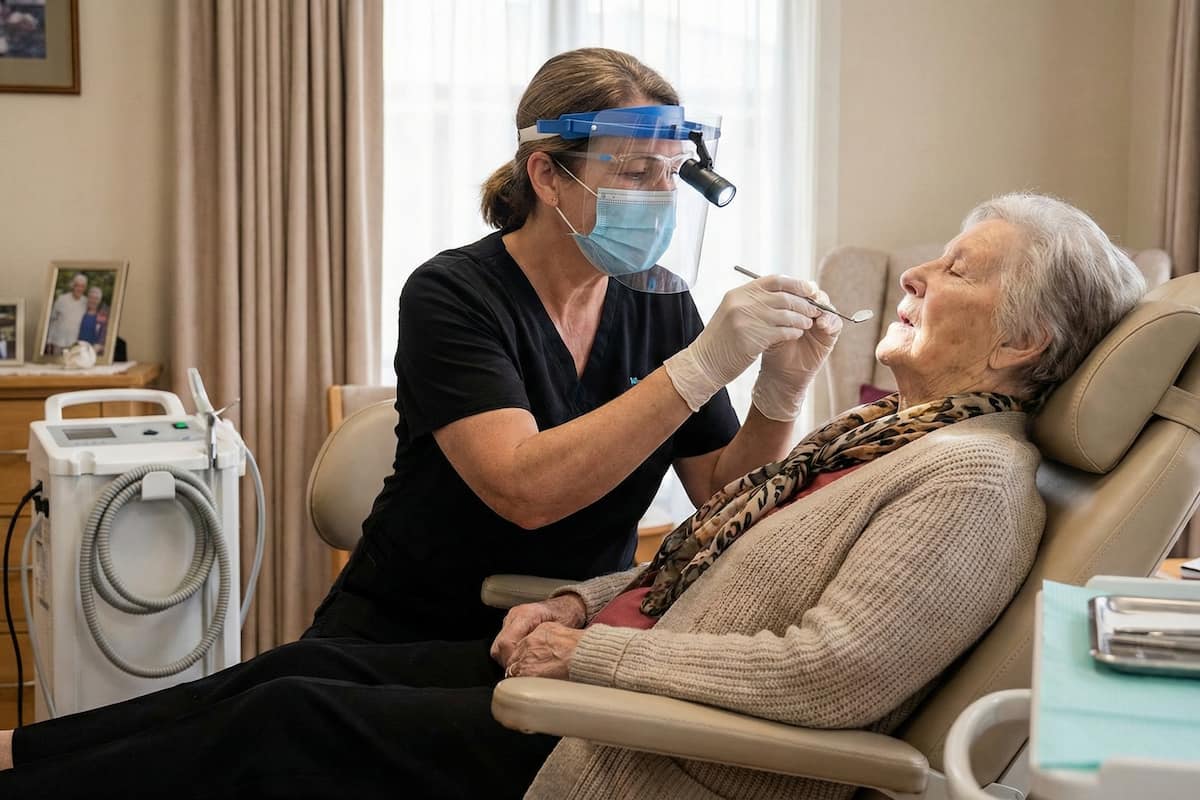
A practical guide to recognising dental emergencies early in elderly residents, and knowing when to seek urgent advice.
Dental pain rarely arrives at a convenient time, and in an aged care setting it often arrives without a clear announcement. A resident who cannot easily describe what is wrong may simply stop eating, become withdrawn, or grow unsettled overnight. A damaged tooth or poorly fitting denture may cause discomfort before someone identifies the problem. Some tooth problems can lead to infection, while denture-related soreness has several possible causes and needs assessment. Recognising the early signals is one of the most valuable skills a family member or carer can have.
Aged Care Dentistry provides mobile dental care to aged care facilities across Perth. An early call helps the team understand the symptoms and advise on urgency, but not every emergency can be managed in a resident’s room. This guide explains the warning signs, the behavioural cues that matter when a person cannot describe pain, and practical steps while professional help is arranged. Call triple zero (000) for trouble breathing or swallowing, or severe or rapidly spreading swelling of the mouth, face or neck. Do not wait for a mobile dental appointment. Heavy uncontrolled bleeding, collapse or a serious injury also needs emergency medical help.
Why Dental Emergencies Are Easy to Miss in Older Adults
Older adults may have several factors that make dental problems harder to manage. Receding gums can expose root surfaces to decay. Dry mouth, including medication-related dry mouth, reduces saliva’s protection against tooth decay. Existing fillings, crowns and dentures also need review when they become damaged or uncomfortable. Frailty, diabetes and other health conditions can affect treatment planning; age alone does not tell us how quickly a dental problem will progress.
Dental problems can be overlooked when the resident has difficulty identifying or communicating discomfort. A person living with dementia may not be able to explain that chewing hurts. Families and carers can help by recording changes from the person’s usual eating, sleep and mouth-care routine. These observations help clinicians investigate; they do not establish a dental diagnosis or replace a broader medical assessment.
Warning Signs You Should Never Ignore
Call a dentist promptly about severe pain, new swelling, persistent bleeding, dental injury or a denture problem that prevents eating. Describe the symptoms rather than deciding on urgency alone. The dentist or facility’s clinical team can advise whether immediate dental care, urgent medical review or a scheduled visit is appropriate.
Severe or Persistent Tooth Pain
Constant or severe toothache, pain that disrupts sleep, or pain that persists despite the resident’s prescribed care plan needs prompt dental advice. Sensitivity to hot, cold or sweet food has several possible causes, including decay, a crack or exposed roots. A dentist needs to examine the mouth to identify the cause. Pain easing temporarily does not prove that an underlying infection has resolved.
Facial Swelling, Abscess, or Signs of Infection
New gum, cheek or jaw swelling needs urgent advice. A dental abscess is one possible cause and needs dental treatment. Fever, pus, a bad taste or feeling unwell adds to the concern. Call triple zero (000) for trouble breathing or swallowing, or severe or rapidly spreading swelling of the mouth, face or neck. Do not wait for a mobile dental appointment. Heavy uncontrolled bleeding, collapse or a serious injury also needs emergency medical help. Swelling near the eye, difficulty opening the mouth or marked deterioration also requires urgent medical assessment.
Bleeding Gums or Bleeding That Will Not Stop
Bleeding during brushing can be a sign of gum disease and should be discussed with a dentist. Heavy, spontaneous or persistent bleeding needs urgent assessment, particularly after an injury or extraction. Tell the clinician about blood-thinning medicines, but do not stop or change them yourself. Do not wait for a fixed number of minutes if bleeding is heavy, the resident is unwell or the airway could be affected.
A Broken, Loose, or Knocked Out Tooth
A newly broken, loose or knocked-out tooth needs urgent dental advice. A fall can also cause a head or jaw injury, so follow the facility’s falls and emergency procedures. A knocked-out adult tooth is time-sensitive and should be assessed immediately. A loose fragment may create a swallowing or inhalation risk, particularly for someone with swallowing difficulty. Do not attempt to remove a firmly attached tooth or root yourself.
Denture Problems That Cause Pain or Prevent Eating
A cracked, lost or poorly fitting denture can interfere with meals, speech and comfort. Sharp edges and sore areas need attention, and an inability to eat or drink safely warrants prompt clinical review. Mobile assessment may help, but some repairs require laboratory work and more than one visit. Avoid household glue or filing the denture. Keep all pieces in a labelled container and ask the dental team how to store them.
Behavioural Signs in Residents Who Cannot Describe Pain
For someone with dementia or limited speech, oral pain may show through changes in daily activities. Families and carers who know the person’s usual routines are well placed to spot those changes. Treat them as a reason to investigate, not proof of a dental emergency.
Watch for a sudden refusal to eat, a preference for soft foods only, or chewing on one side of the mouth. Increased agitation, restlessness, or distress that has no obvious cause can be pain seeking an outlet. Pulling at the cheek or mouth, disturbed sleep, moaning during meals, drooling, or a new reluctance to wear dentures all deserve a closer look. A resident who becomes withdrawn, stops talking, or resists mouth care they previously accepted may be protecting a sore area.
Report unexplained changes in eating, mood or behaviour to the care team, and ask whether an oral examination is needed. Infection elsewhere, medication effects, delirium, constipation and other problems can produce similar changes. Sudden confusion or significant deterioration needs prompt medical assessment, alongside any dental concerns.
What to Do While You Wait for the Dentist
Contact the facility’s nurse or clinical team and a dentist as appropriate. While waiting, follow the resident’s individual care plan and any advice given by the treating clinician. Monitor for deterioration and escalate immediately if emergency signs develop. Do not use comfort measures as a reason to delay treatment.
For pain or swelling: ask the nurse, dentist or pharmacist about relief appropriate to the resident’s medicines and medical conditions. Do not add or change medicines yourself. A cold compress held against the outside of the cheek may help if tolerated. Never place a tablet directly against the gum.
For a knocked-out tooth: seek immediate dental advice. Handle it by the crown, not the root, and do not scrub it. If it cannot be safely replaced, keep it in milk in a container and take it to the dentist. In a person who is confused, drowsy or has swallowing difficulties, do not store the tooth in the mouth or attempt reinsertion without professional guidance because of choking or inhalation risk.
For bleeding: follow the clinician’s instructions. If the person can safely cooperate, clean gauze and steady pressure may help. Do not leave loose gauze in the mouth of someone unable to manage it safely. Seek emergency medical help for heavy or uncontrolled bleeding.
For a broken denture: avoid wearing a sharp or unstable appliance and keep the pieces for professional assessment. Arrange foods and fluids with the care team in line with the resident’s swallowing and nutrition plan; do not independently change a prescribed texture or fluid consistency.
Note what you observe: when the problem started, what makes it worse, and any change in eating or behaviour. This helps the dental team work quickly and safely on arrival.
How Mobile Emergency Dentistry Works in Aged Care Settings
Transport, mobility limitations and the disruption of leaving familiar surroundings can make a dental clinic visit difficult. A mobile service can bring an assessment to the aged care facility, using portable equipment where the setting and the resident’s needs allow. Let the team know about mobility, communication and swallowing needs before the visit so they can plan an appropriate assessment.
Aged Care Dentistry offers mobile assessments and a range of treatments, including denture care and tooth extractions where suitable. The dentist first assesses the problem, the resident’s medical history and the facilities available. Some problems need a return visit, laboratory work, referral or hospital care. Contact the team to confirm availability and coverage for the particular facility; same-day attendance or treatment cannot be assumed.
Reducing the Risk of Dental Emergencies
Daily mouth care and professional reviews can reduce the risk of some emergencies, although not every dental problem is preventable. Support tooth brushing and denture cleaning according to the resident’s care plan, and report pain, loose teeth, broken appliances or sores early. People with full dentures still need their mouth tissues checked and cleaned. Never force mouth care if a person becomes distressed; seek a tailored approach from the care team.
Ask the dentist to recommend a review interval based on the resident’s health and oral needs. Review appointments can identify decay, gum disease, worn fillings and denture problems before symptoms become severe. Facility staff can help by documenting when the last assessment took place, the agreed daily care routine and who to contact if concerns arise.
Worried About a Resident? Speak to Aged Care Dentistry Today
If you have noticed severe pain, swelling, bleeding or a new dental injury, seek advice promptly. Give the clinician the resident’s symptoms, how long they have been present, relevant medical conditions, medicines and any changes in eating or behaviour. For the emergency red flags above, call 000 rather than waiting for a booking.
Call (08) 6558 1889 or contact Aged Care Dentistry to discuss the resident’s symptoms, location and appointment availability. The team can explain assessment arrangements and costs. An enquiry form is not an emergency service.
For further general information, see healthdirect guidance on toothache and swelling. This article is general information and does not replace individual clinical advice.
Frequently Asked Questions
A suspected abscess needs urgent dental assessment. Call triple zero (000) for trouble breathing or swallowing, or severe or rapidly spreading swelling of the mouth, face or neck. Do not wait for a mobile dental appointment. Heavy uncontrolled bleeding, collapse or a serious injury also needs emergency medical help.
Call to describe the symptoms and confirm current availability for the facility. Same-day attendance cannot be guaranteed. Do not wait for a booking if emergency medical signs are present.
A mobile dentist can assess the denture and discuss repair, adjustment or replacement. Some work requires a laboratory or several visits. Keep the pieces and do not use household glue.
Contact a dentist immediately and check for other injuries. Hold the tooth by the crown, avoid scrubbing the root and keep it in milk in a container if it cannot be safely replaced. Do not keep it in the mouth or attempt reinsertion in someone with impaired swallowing, reduced alertness or poor cooperation without professional guidance.
Do not assume that residential care fees or an aged care funding program cover dental treatment. Ask for assessment and treatment costs and check any DVA entitlement or private health benefit for the proposed care before proceeding.
Support daily oral care, keep dentures clean, document symptoms and arrange professional reviews at the interval recommended for each resident. Report new pain or changes promptly rather than waiting for a routine visit.
Mobile assessments may be possible in a suitable bed or chair. Tell the team about positioning, medical and communication needs so they can assess what is appropriate. Some care may require another setting.
The practice describes a Perth service area from Meadow Springs near Mandurah to Yanchep. Contact the team to confirm visits and availability for the specific facility, especially for an urgent concern.