
Mobile Dental Assessments for Aged Care Residents: What Happens During a Visit?
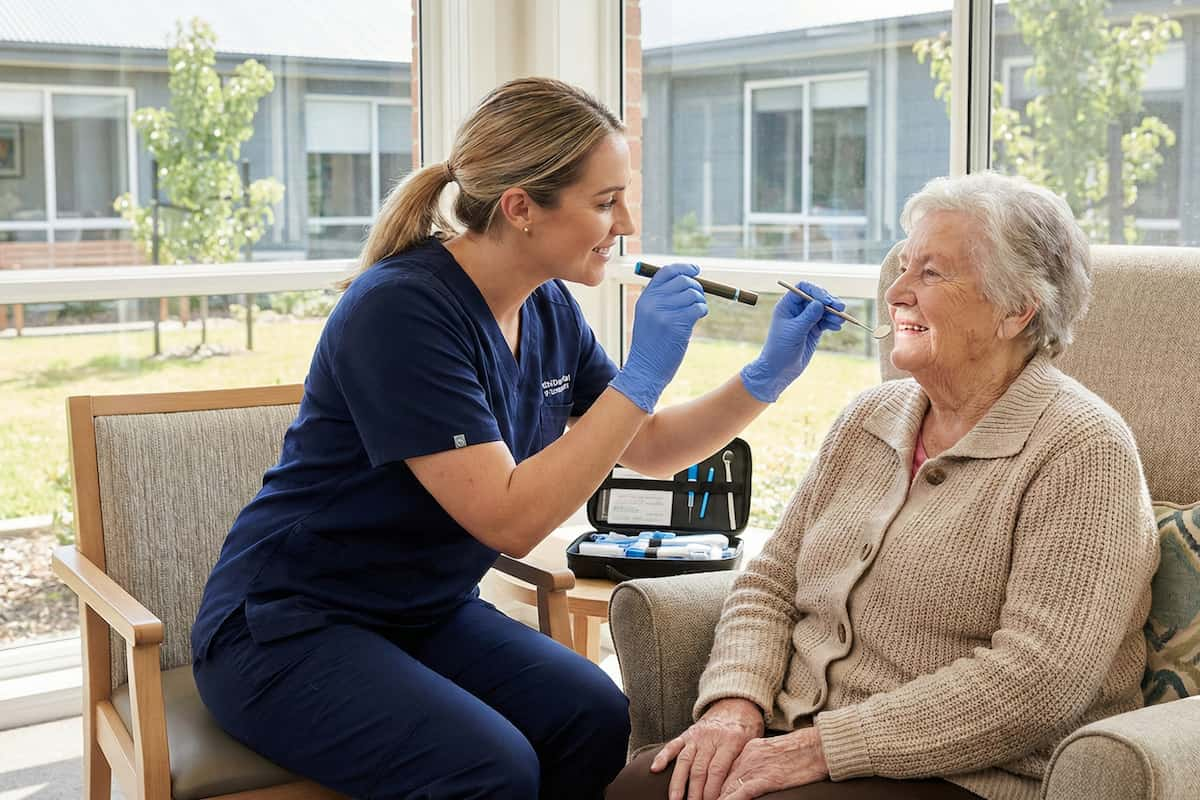
A practical walkthrough for families and facility staff, from preparing information to understanding the treatment options.
A mobile dental assessment brings a clinician and portable equipment to a resident who may find clinic travel difficult. It is still an individual clinical assessment: the dentist needs to understand the person’s health, comfort and wishes before recommending care. This guide explains the usual stages and the questions families can ask. The exact order, duration and scope depend on the resident and the setting, so confirm the arrangements with the team when booking.
Before the visit: consent, history and coordination
Share the medical history, current medicines, allergies and relevant dental records with the treating team through the agreed secure process. Tell them about mobility, swallowing needs, communication preferences and changes in eating or sleep. A dementia diagnosis does not automatically remove a person’s ability to consent. The clinician must establish capacity for the particular decision and, where necessary, identify the legally authorised substitute decision maker. Do not assume that any relative can consent. A familiar supporter and the resident’s preferred time of day may help the visit go more comfortably.
Setting up in the resident's room
The team checks whether a bed, chair or other space is suitable for the assessment, including positioning, access and safety. Many residents can be assessed without a trip to a clinic, but the setting must work for the person and the procedure. Tell the team about transfer equipment, oxygen or other care needs in advance. Portable equipment does not remove the need for appropriate infection prevention or safe clinical positioning. If care cannot be completed safely at the facility, the clinician can discuss another setting or referral.
The examination itself
The dentist may assess the face and jaw, teeth, gums, dentures and soft tissues of the mouth. They look for decay, damaged teeth, gum problems, sore areas and other abnormalities that may need investigation. This examination is not a guarantee that every condition can be ruled out; some findings require imaging, monitoring or specialist assessment. With permission, information from a familiar carer can help explain when discomfort occurs. The clinician should respond to distress or withdrawal and adapt, pause or limit the examination when needed.
On site x-rays and intra oral scanning
X-rays may be recommended when they are likely to help answer a clinical question. The practice offers portable imaging, but whether an image can be obtained depends on the resident’s needs and the setting. The dentist explains why it is needed and considers suitability and radiation protection. For some denture work, an intra-oral scan may be an option. Scanning is not suitable for every person or every appliance, and some work still needs conventional impressions or referral. Ask what is proposed rather than assuming every technology will be used at every visit.
Options, costs and the written treatment plan
After the assessment, ask for the findings, proposed treatment options, likely benefits and risks, alternatives and costs. It can help to separate urgent concerns from care that can be planned over time. An assessment does not mean every treatment can be completed immediately. Some work requires separate consent, further visits, laboratory stages or referral. Sedation, if considered, requires its own clinical assessment and is not an automatic solution to distress. Confirm any funding or insurance arrangements and possible costs before deciding; eligibility should not be assumed from residence in aged care.
After the visit: what families should expect
Agree who will receive the findings, with appropriate consent, and what staff should record in the care plan. Ask who to contact if pain or swelling develops, and what daily mouth or denture care is recommended. If treatment is chosen, confirm the next appointment and any preparation with the team. The dentist should recommend review timing based on the resident’s risk and needs. New symptoms should be reported sooner rather than waiting for that review. Keep the plan accessible to the people responsible for daily care.
Arrange a mobile dental assessment
Call (08) 6558 1889 or contact Aged Care Dentistry to discuss the resident’s symptoms, location and appointment availability. The team can explain assessment arrangements and costs. An enquiry form is not an emergency service.
For further general information, see healthdirect guidance on toothache and swelling. This article is general information and does not replace individual clinical advice.
Frequently Asked Questions
Duration varies with the examination, communication needs, imaging and the resident’s comfort. Ask the team when booking rather than relying on a fixed visit length. Some assessments may need more than one visit.
Often an assessment can take place in a suitable room, bed or chair at the facility. The clinician must confirm positioning and safety. Some investigations or treatment may need a different setting.
The practice offers portable x-rays where clinically indicated and appropriate. The dentist assesses the need, explains the procedure and decides whether an image can safely be obtained in that setting.
The resident should be supported to make the particular decision where they can. If they lack capacity for it, the clinician must identify the legally authorised substitute decision maker under the applicable law. Dementia alone does not determine capacity, and being a relative does not automatically establish authority.
Ask the practice for assessment fees, including any imaging, and a treatment estimate. Confirm any private health benefit or DVA eligibility, approval requirements and possible out-of-pocket costs for the proposed care. Do not assume aged care fees cover dental services.
The dentist should set the interval according to the resident’s oral health and care needs. Arrange an earlier review for new pain, swelling, damage or eating changes. Ask about establishing a baseline when a person enters a facility if no recent dental record is available.