
Nursing Home Dentist in Perth: A Guide for Families
A move into residential aged care brings plenty of decisions: medications, mobility, meals and the people who will help each day. Dental care deserves a place in that plan too. If a parent can no longer attend their usual dentist, it is worth agreeing early how routine reviews and unexpected problems will be managed.
A mobile dentist can make dental assessment and selected treatments accessible without a journey to a conventional clinic. The practical questions are who coordinates the visit, how the resident takes part in decisions, what the dentist can safely do and how costs will be covered. Here is a guide for Perth families working through those questions.
Why dental care needs a clear plan
Daily brushing, denture care and professional dental reviews do different jobs. A resident may receive help with brushing but still need an examination for a broken tooth, persistent soreness or a denture that no longer fits comfortably. Equally, a dental visit does not replace the day-to-day support in their care plan.
Changes in health can make an established routine harder to maintain. Arthritis may affect a person's grip, dementia can make familiar tasks confusing, and some medicines cause dry mouth. These factors can increase oral-health risks, but deterioration is not inevitable. The aim is to notice changes and adapt care before discomfort disrupts meals, sleep or communication.
Start by recording the usual dentist, the date of the last review, any outstanding treatment, and what help your parent wants or needs. Include dentures, implants and oral-care products in that conversation. Do not assume the old routine will automatically continue after a move.
What the aged care home and dental team each do
Residential providers have an important role in daily oral hygiene and access to professional care. The strengthened Aged Care Quality Standards require processes to facilitate oral-health assessments at the start of care, regularly and when needed. They also require monitoring for deterioration and assistance with daily oral hygiene. This is a shared care responsibility, not a task families must manage alone.
Ask the care manager who coordinates dental appointments, how concerns are recorded and which staff member should receive the dentist's recommendations. Some homes have visiting arrangements; others help residents access an external provider. A clinical dental diagnosis or treatment still needs an appropriately qualified dental practitioner.
Our guide to mobile dental services in Perth explains the visiting approach. When arranging care, check that everyone understands who will book, who will give consent, who will receive updates and how the agreed daily care will be followed between visits.
Booking a visit and consenting to treatment are different
A resident, family member, supporter or facility coordinator can contact the practice to discuss an appointment. Organising the visit or paying an invoice does not, by itself, establish authority to consent to someone else's treatment or receive confidential health information.
Residents who can make the particular treatment decision should be supported to decide for themselves. A diagnosis of dementia does not automatically remove that ability. Give the dental team any information that helps communication, such as hearing aids, preferred language, helpful routines or a trusted support person.
If the person cannot make the decision, the treating clinician must check the relevant WA decision-making arrangements. An applicable Advance Health Directive may guide the decision. Otherwise, WA's hierarchy can include an authorised enduring guardian or tribunal-appointed guardian, followed by specified relatives or other people who meet the legal requirements. A formal appointment is not the only possible route.
An enduring power of attorney in WA concerns financial and property matters, not treatment consent. Share existing documents with the team, and ask for help if authority is uncertain rather than assuming the invoice contact can consent. HealthyWA explains the treatment decision-making process. The dental team should confirm the correct pathway for the circumstances; this general guide is not individual legal advice.
What to expect from the first appointment
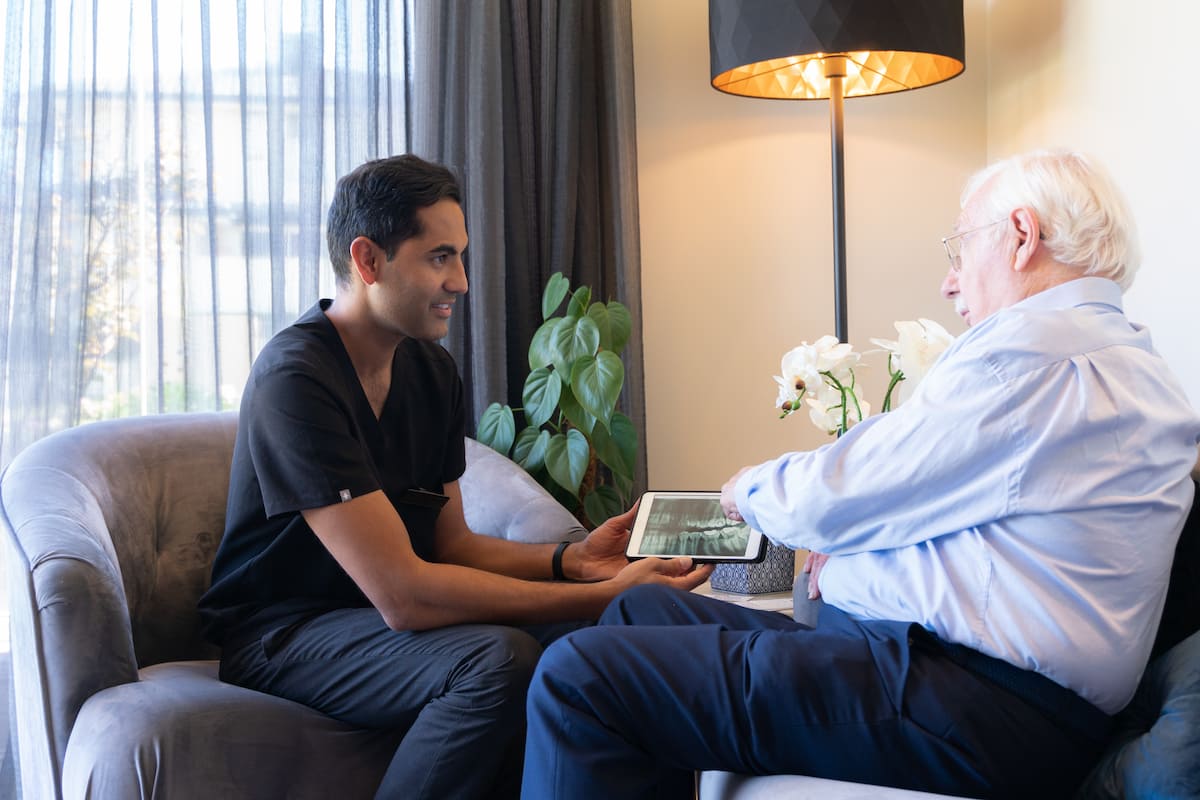
The visit begins with understanding the person and the concern. The dentist reviews medical history and medicines, examines the mouth as far as the resident can comfortably tolerate, and considers whether imaging is needed. Our assessment service includes portable x-rays when clinically indicated and feasible.
Bring a current medicine list, allergies, recent health changes and relevant care plans. Tell the team about swallowing difficulties, bleeding risks, osteoporosis or cancer medicines, and any previous distress during dental care. Do not stop or change prescribed medicines in preparation for the visit unless the treating clinicians have specifically instructed it.
After assessment, ask for the options, expected benefits, risks, costs and likely number of visits. Some treatment may be possible promptly with appropriate consent; other care needs planning, medical advice or referral. There is no guarantee that everything can be diagnosed or completed in one appointment. For some residents, comfort-focused care or monitoring with a clear review plan may be appropriate.
Understanding fees and possible assistance
Ask what the assessment fee includes, whether imaging or travel is charged separately and how additional treatment will be quoted. Do not assume a dental bill is included in the residential care fee. Medicare generally does not pay for routine adult dental treatment, although other eligibility-based assistance may be available.
Private health extras benefits depend on the policy, item numbers, limits and waiting periods. DVA dental support depends on eligibility and the proposed treatment; limits, approvals or co-payments can apply. Confirm arrangements before treatment, including any separate anaesthetic charges. Avoid treating a card as a guarantee that every service is free.
For people living at home, daily oral-hygiene assistance is different from dental treatment. Dental care is excluded from the current Support at Home service list. Ask the care provider about eligible personal-care assistance, and the dental team about treatment funding options. If considering a payment plan, check eligibility, fees and terms before agreeing.
Changes worth raising promptly
Families and regular carers can help by sharing changes from the person's usual pattern. These observations do not diagnose a dental problem, but they give the care team useful information:
- Pain, new sensitivity, a broken tooth or persistent mouth soreness.
- Chewing on one side, avoiding foods or taking noticeably longer to eat.
- Dentures that rub, move, break or are no longer being worn.
- A dry mouth, persistent bad breath or bleeding gums.
- New distress during mouth care, changes in sleep or unexplained changes in behaviour.
- Reduced intake or unplanned weight loss, which also need broader medical and nutritional assessment.
Seek prompt dental advice for pain, swelling or signs of infection rather than waiting for a routine review. If there is difficulty breathing or swallowing, rapidly spreading swelling or another life-threatening problem, call 000. Sudden confusion or a person becoming acutely unwell needs urgent medical assessment, not an assumption that the cause is dental.
Questions to ask before booking
- Is the service able to assess this resident's medical, mobility and communication needs?
- What can be assessed or treated on site, and when is a clinic or hospital safer?
- What information, consent documents and facility access arrangements are needed?
- How are costs, possible funding and treatment choices explained?
- How will the resident, authorised supporters and care staff receive the care plan?
- Who should we contact for follow-up or an urgent problem outside scheduled visits?
The most useful answer is a clear explanation of what is suitable for your parent, including the service's limits. A confident plan leaves room for assessment rather than promising a particular procedure in advance.
Arrange a dental assessment in Perth
Aged Care Dentistry provides mobile care for people who have difficulty attending a conventional clinic. To discuss your parent's situation and confirm availability at their location, call (08) 6558 1889 or use our contact page. Have the facility name and a brief description of the concern ready so the team can explain the next step.
Frequently Asked Questions
Discuss the resident’s preferred provider with the care manager. The home and visiting dental team need to coordinate access, infection-control requirements, suitable space and the resident’s needs. Ask how the home supports access to dental care rather than assuming a particular dentist is already included in the arrangement.
Daily help with oral hygiene is different from professional dental treatment. Dental care is out of scope under the current Support at Home service list. For residential care, check the resident’s agreement and available assistance rather than assuming treatment is included. Private insurance, public dental eligibility or DVA arrangements may be relevant, but eligibility and costs must be confirmed.
You can contact the practice and care home to discuss arrangements from a distance. Agree who will coordinate the booking, receive permitted updates and handle costs. The team must still involve the resident and establish the correct consent and information-sharing arrangements. Being the person who organises the visit does not automatically make you the treatment decision-maker.
If the resident can make the particular treatment decision, it is their decision. Otherwise, the clinician follows the applicable WA decision-making pathway, including any relevant Advance Health Directive and the hierarchy of substitute decision-makers. An enduring power of attorney does not itself authorise treatment decisions in WA. Ask the clinician to explain the options and authority; unresolved disputes may need specialist advice.
Some assessments and treatments can be adapted to a resident’s bed or usual chair. The dentist must assess safe positioning, access, swallowing and airway considerations, and the proposed procedure. Bedside care is not suitable for every person or treatment. Discuss mobility and transfer needs before the visit so the team can plan or recommend an alternative setting.
Prepare the current medicine list, allergies, medical conditions, recent hospital admissions and relevant consent documents. Include swallowing or breathing concerns, mobility needs, previous dental experiences and the best way to communicate with the resident. Ask care staff for help assembling this information. Do not stop prescribed medicines unless the treating clinicians give specific instructions.
You may not be able to tell. Report pain, swelling, a broken tooth, new eating difficulty, face touching or distress during oral care. These signs can have several causes, so a dental assessment may form part of a wider medical review. One visit cannot always rule out every cause. Breathing or swallowing difficulty, rapidly spreading swelling or life-threatening illness requires emergency help on 000.
The dentist should discuss likely benefit, risk, comfort and the resident’s goals. A plan may involve a simpler treatment, referral, preventive care or comfort-focused management with review. Choosing less intervention still requires a plan for pain, infection and changes in the person’s condition. Decisions should be made with the resident or the appropriate decision-maker, not on age alone.